“The keys to your own home are the best integration program.”
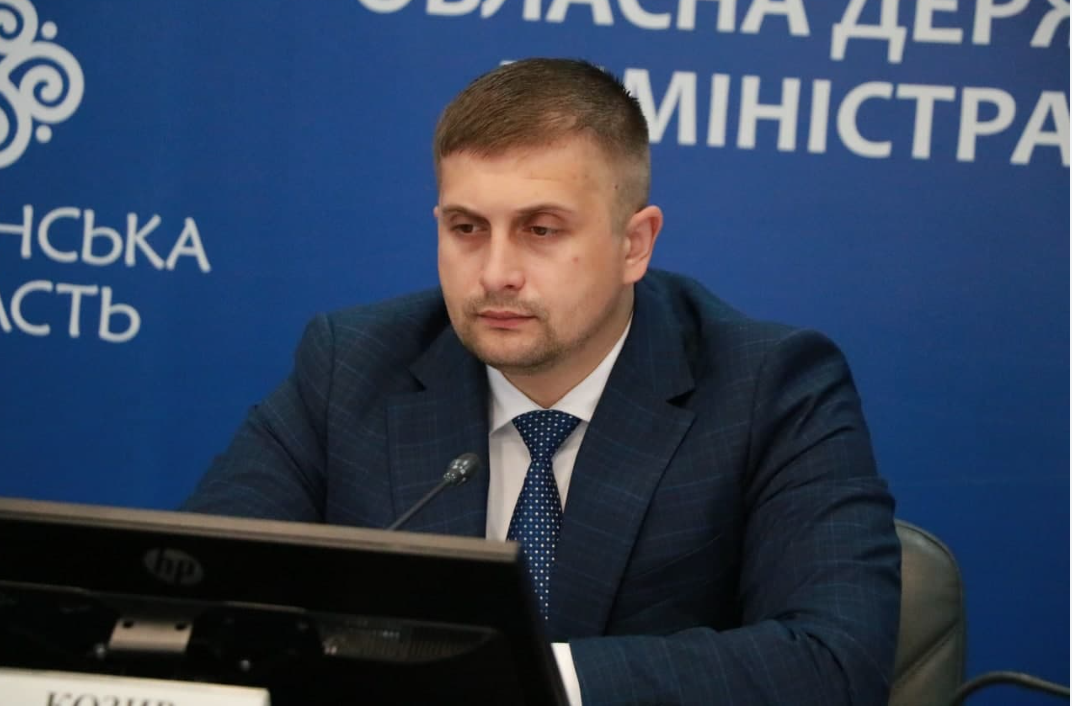
People’s Deputy of Ukraine Serhiy Kozyr stated in his column on the Interfax-Ukraine website that state policy regarding internally displaced persons (IDPs) and frontline communities is reaching a new level. He emphasized that recent legislative initiatives create a foundation for transitioning from fragmented assistance to a unified comprehensive strategy that combines support for people and the recovery of territories.
Kozyr notes that until recently, IDP issues were viewed primarily through the lens of social protection, while frontline communities were addressed in the context of regional development and security. However, a clear line cannot be drawn between these areas. “A person leaves precisely from a frontline or occupied territory. Their ability to return depends on security, jobs, housing, and community recovery,” the deputy writes. That is why, in his opinion, support for IDPs and the development of frontline territories must become parts of a single state policy.
According to the author, housing policy should be the main priority. “The keys to your own home are the best integration program,” Kozyr stresses. He proposes setting an ambitious target for 2027 — to provide at least 100,000 housing solutions for IDPs through a combination of housing certificates, preferential lending, social housing, support for purchasing homes in rural areas, and municipal rental.
The deputy also advocates for the introduction of a single IDP accompaniment route. Today, a person is forced to navigate independently between various government agencies, each seeing only its own part of the problem. Instead, a comprehensive model is needed, where a responsible specialist accompanies the displaced person from evacuation to full integration, and all services — housing, social, medical, and educational — operate as a single system.
In addition, Kozyr suggests revising the state assistance system: increasing the basic payment to 4,500 hryvnias and providing it regardless of income for the first six months after displacement. He considers it unacceptable to deprive a person of support because they are trying to solve their housing issue independently, for example, by purchasing land or an unfinished house.
The deputy pays special attention to frontline communities. “A community that faces shelling every day cannot operate under the same economic, tax, and budgetary rules as a relatively safe city,” he writes. Among the necessary measures are special tax regimes, war risk insurance, affordable lending, and an increased share of local taxes remaining in the budgets of such communities. Guarantees are also needed for critical infrastructure workers who remain in these territories.
Following the joint meeting of the inter-factional groups “IDPs of Ukraine” and “Frontline Territories” with the participation of Kharkiv Mayor Ihor Terekhov, a package of legislative initiatives is planned to be prepared by August 18 for the new Cabinet of Ministers and the Verkhovna Rada. Serhiy Kozyr emphasizes that real changes will occur only when the state can guide a person through the entire journey — from the evacuation bus to the keys to a new home, and provide frontline communities with stable development rules that take security conditions into account.